
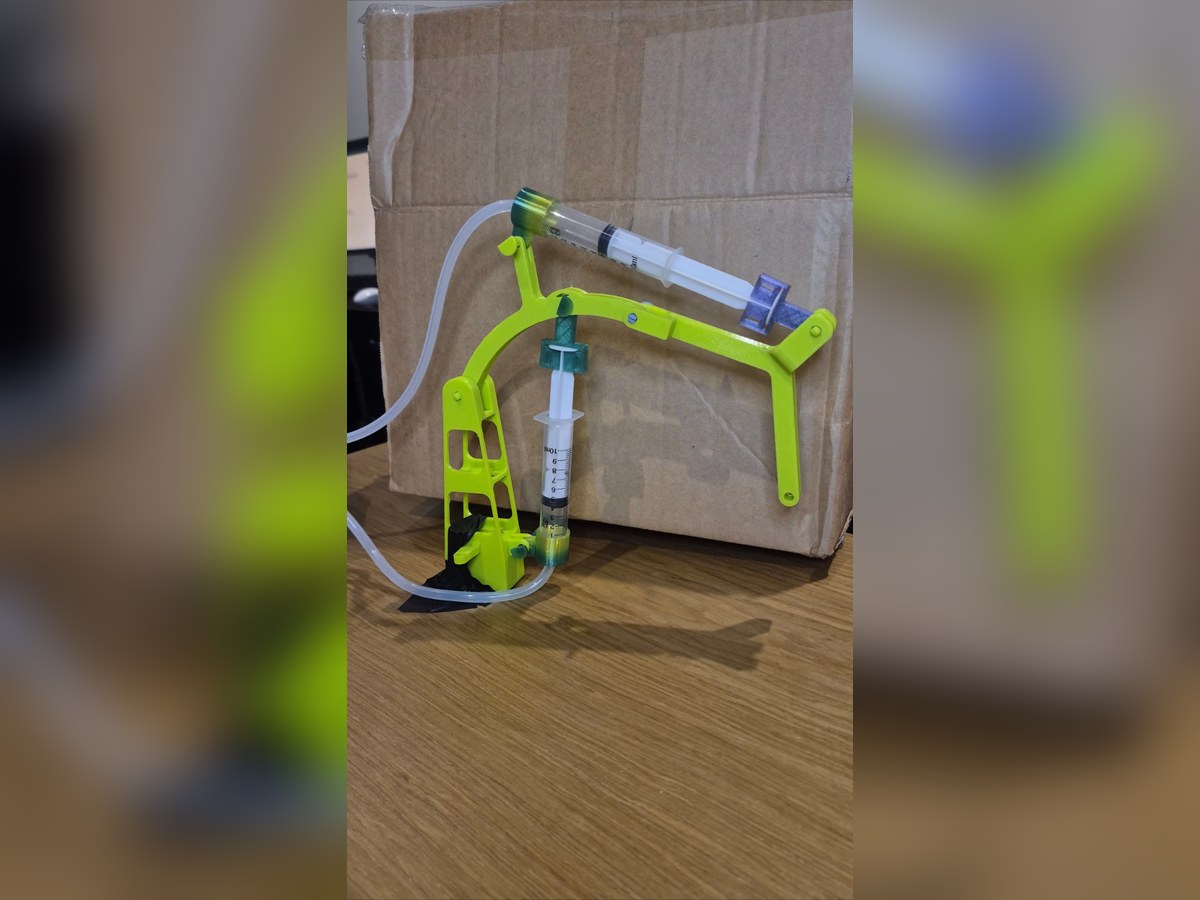
Hydraulic Robotic Arm
Build a fully articulated robotic arm powered entirely by hydraulics — no motors, no electronics. Using nothing but syringes, tubing, and liquid, students construct a multi-jointed arm and discover how fluid pressure can lift, push, and grip. A hands-on introduction to fluid power and mechanical motion that students build and take home.
RoboticsHydraulicsFluidsAges 10+
Contact Us
Curriculum
Students design, build, and operate a multi-jointed hydraulic arm using syringes as pistons. Exploring degrees of freedom and Pascal's Principle, they discover how incompressible liquids transfer force to create powerful, precise movement. Students bridge physics and mechanical engineering to assemble their own working hydraulic-powered machine.
Subject Content
- Mechanical Design & Assembly
- Hydraulics & Fluid Power
- Physics of Motion (Degrees of Freedom)
- Force & Pressure (Pascal's Principle)
- Tools, Components and Work Safety
Course Outcomes
- Understand degrees of freedom and how they define the ways an object can move
- Explain how hydraulic systems use incompressible liquids to transfer force
- Apply Pascal's Principle to real-world mechanical systems
- Build and assemble a multi-jointed mechanical arm from individual components
- Compare hydraulic and pneumatic systems and evaluate their real-world applications
- Develop problem-solving and critical-thinking skills through hands-on construction and testing